Spiritual growth does not happen by accident.
No one just drifts into becoming more like Jesus. We definitely grow older. We may attend church for many years and learn more about the Bible, but that does not mean that we will automatically become more spiritually mature or more Christlike.
Growth requires intention. Growth requires effort.
At Fresh Faith, Grow is the second step in our discipleship pathway: Gather, Grow, Give, and Go. We gather because we were not created to follow Jesus alone. We grow because Jesus did not call us just to believe in certain things about Him. He calls us to follow Him, to become like Him. That requires us to grow.
That kind of transformation is the work of God’s grace in us, but it also requires our willing participation. God invites us to remain close to Jesus; God invites us to respond to the Holy Spirit; God invites us to practice the habits that will strengthen our faith; and God invites us to surrender whatever is keeping us from becoming the person He has created us to be.
Jesus describes this relationship in John 15:4-5. He tells his disciples to remain in Him, just as a branch must remain connected to the vine. A branch cannot produce fruit by itself. It receives everything it needs to live and to bear fruit from the vine it is connected to.
The same is true for us.
There is no way for us to produce lasting spiritual growth through determination alone. We may be able to modify a few behaviors, perhaps develop better routines, become a little more disciplined, but actual genuine spiritual transformation can only happen when we remain connected to Jesus.
Apart from him, we can do nothing! (John 15:5) Apart from Him there is no way we can produce the kind of fruit that God desires in our lives.
Growth Begins by Remaining
We often think spiritual growth begins with doing more.
We may decide that we need to read more of the Bible; perhaps we decide we should pray longer; perhaps more church activities are what we need; or you know what, maybe we need to try harder to avoid sin. These practices can be valuable and perhaps even helpful, but Jesus begins somewhere deeper. He begins with relationship.
“Remain in me.”
Before there can be fruit, there must be connection.
A branch does not produce fruit by struggling and forcing it independently. It produces fruit by being connected to the vine, by receiving the life flowing into it. In the same way, spiritual disciplines are not attempts to earn God’s love or to somehow prove that we are good Christians. They are ways of remaining attentive and available to the God who already loves us and is working within us.
We spend time in the Scriptures because we want God’s truth to shape our thinking.
We pray because we want to know God’s heart and align our lives with His will.
We worship because we need to remember who God is and give him the honor He deserves.
We gather with other believers because God often uses Christian community to encourage, correct, and strengthen us.
These practices do not transform us by themselves. They help to put us in a posture where we can respond to the transforming grace of God and allow His Holy Spirit to work in us what is pleasing to Him.
Growing Christians are not always the people who appear to be the busiest or know the most religious information. Growing Christians are those who are intentionally remaining close to Jesus and allowing His life to shape their own.
Plants Need More Than Good Intentions
My wife has a love of flowers. Every year I spend a great deal of money on them for the flower beds that she lovingly tends. I have no talent for this myself, as I have been known to kill any plant I touch. She enjoys choosing the flowers she will plant, planting them, and watching them bloom and flourish each year.
I may grumble a bit, especially when I see the receipt, but I appreciate the results when the flowers come up and look beautiful. Healthy plants, though, require more attention than most people realize.
They need the right amount of sunlight, not too much or too little. They need water, good soil, protection from pets, and regular attention. A plant cannot simply be placed in the ground and be expected to flourish without care.
The desire for a healthy flower bed is not enough. Someone must intentionally provide what the plant needs to grow.
Our spiritual lives are very similar.
Most Christians desire growth. We want stronger faith, we want a deeper prayer life, we want more understanding of Scripture, and we want victory over temptation. We want to respond to difficult people with grace and remain faithful when life gets hard.
However, wanting spiritual maturity is not the same thing as developing the habits that will help to nurture spiritual maturity.
A person may want a close relationship with God while rarely spending time with Him in prayer. Someone may want biblical wisdom while seldom opening the Bible. We may want stronger Christian relationships while we remain guarded and distant from others.
We may desire freedom from a harmful habit or pattern in our lives while refusing to invite anyone into our struggle.
Good intentions are a beginning, but growth requires more than good intentions.
Just as a gardener must consistently care for a plant, we must intentionally make room for God to work in our lives.
The Necessary Work of Pruning
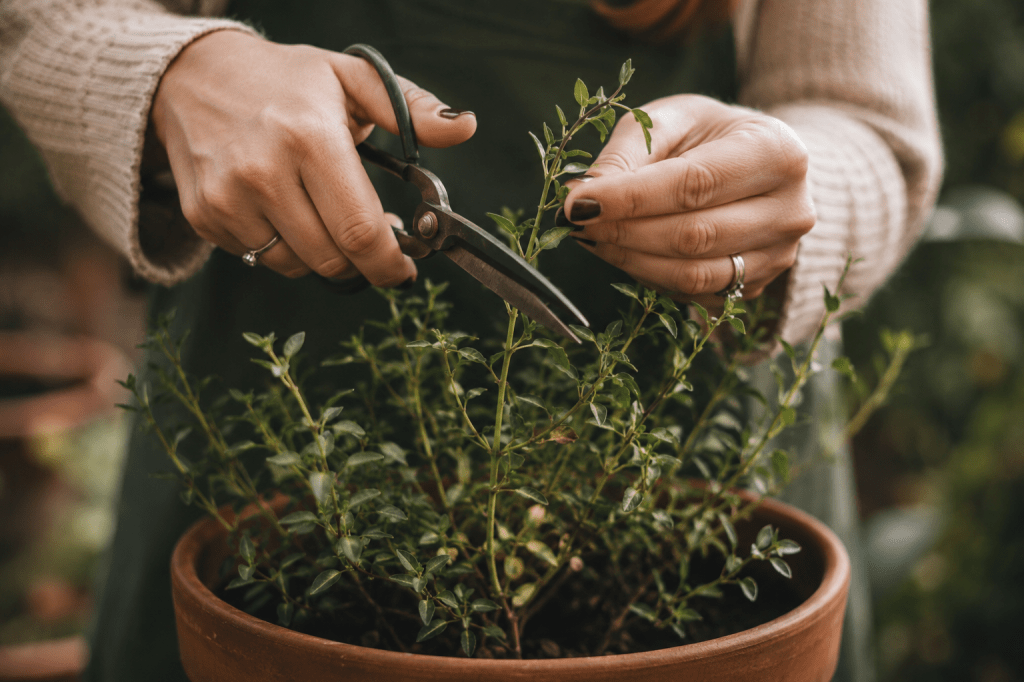
One of the most surprising parts of caring for plants is the need to cut away parts of them, an act called pruning.
To someone unfamiliar with gardening, pruning can appear harmful at first. Healthy-looking branches may be cut back. Leaves, stems, or blooms may be removed. For a moment, the plant may appear smaller and less impressive than it did before.
However, an experienced gardener understands that pruning is not intended to harm or destroy the plant. It removes dead, diseased, damaged, or unproductive growth so that the plant can become healthier and more fruitful.
Jesus uses this same picture in John 15. He explains that the Father prunes fruitful branches so they may be even more fruitful.
Pruning is not always comfortable; in fact, it almost never is.
God may reveal to us habits that are weakening our spiritual lives. He may expose attitudes that do not reflect the character of Jesus. He may challenge our priorities, confront our pride, or show us something that we may have allowed into our lives that is keeping us spiritually stunted.
Sometimes the thing that needs to be pruned is obvious. At other times, it may be something that is not necessarily wrong but has become unhealthy, distracting, or too important to us.
God may place his finger on resentment we have refused to release.
He may show us a pattern of speaking that consistently wounds others.
He may confront the amount of time that we spend on entertainment, social media, or work.
He may show us that a relationship is influencing us in a way He does not want us to go.
He may expose our need for control, for recognition, for comfort, or for approval.
When God reveals something that needs to change, we have a choice to make. We can resist His work and cling tightly to what is familiar, or we can surrender it and trust that the One who is doing the pruning knows how to make us healthy and fruitful.
God does not remove things from our lives to make us miserable. He does so to free us from whatever is preventing us from becoming more like Jesus.
Transformation Requires a Renewed Mind
Romans 12:2 tells believers not to be shaped by the patterns of the world but to be transformed by the renewing of their minds.
The world around us is constantly doing everything it can to shape us.
Our culture tells us what should matter, what success should look like, how we should respond to someone who hurts us, and what we supposedly need to be happy. Without realizing it, we can begin thinking and living according to those patterns. Chasing the ever-elusive rabbit around the track.
God’s Word renews our minds by showing us what is true.
Scripture teaches us that greatness is found in serving, forgiveness is stronger than revenge, generosity is better than selfishness, and holiness matters far more than popularity. It reminds us that our identity is found in Christ rather than in our achievements, possessions, failures, or the opinions of others.
That is why regularly reading and reflecting on Scripture is so important for us. We do not read the Bible simply to complete a daily assignment or to collect more information. We read it so that God can correct our assumptions, reshape our desires, and teach us to recognize his voice.
Prayer is also part of this renewing work.
Prayer is more than just throwing a list of demands to God. It is an honest conversation in which we bring God our fears, our temptations, questions, failures, and hopes. It is also a place where we become quiet enough to listen and surrender our plans to His.
Through Scripture and prayer, God begins changing how we think. As our thinking changes, our desires, decisions, attitudes, and actions begin to change as well.
Growth Requires a Response
We can read Scripture every day and still resist truth. We can pray while refusing to obey the answer that God gives us. We can attend worship, participate in a group, and listen to moving sermons without surrendering the areas of our lives that God is trying to address.
James warns believers not merely to listen to the Word but to do what it says. (James 1:22)
Obedience is where spiritual truth becomes spiritual transformation.
When God calls us to forgive and we start taking steps toward forgiveness.
When God calls us to generosity and we start opening our hands.
When God reveals sin and we start confessing it and turning from it.
When God calls us to serve, speak, wait, apologize, or reconcile and we respond faithfully
That is when growth begins.
We will not always respond perfectly, but spiritual growth requires a willingness to say yes to God.
Accountability is a great way to help us make the right response. We all have blind spots, excuses, and areas where we are tempted to compromise. Trusted brothers and sisters give us people who can pray with/for us, ask the tough questions, encourage us as we make progress, and remind us of the commitments we have made.
Choose Your Next Step
Plants do not become healthy and fruitful overnight, and neither do Christians.
Spiritual growth is almost always the result of small, faithful choices made repeatedly over time. It happens as we remain connected to Jesus, make room in our lives for God through spiritual disciplines, respond obediently to His voice, and allow Him to prune whatever hinders our growth.
You do not have to change everything at once, but you should respond to whatever God is showing you today.
Perhaps you need to strengthen one spiritual practice in your life. You may need to begin reading a passage of Scripture each morning, or perhaps establish a consistent time for prayer, or join a small group.
Perhaps your next step is surrender. God may already be showing you a habit, attitude, priority, relationship, or an area of disobedience that needs to be put into His hands.
Do not ignore His invitation.
Take a moment and ask:
What spiritual practice do I need to strengthen?
What area of my life do I need to surrender?
Choose one step and start there.
Growth will not happen by accident; remain connected to Jesus and faithfully commit to taking your next step today.








Leave a Reply